Sharing your home with furry companions brings immeasurable joy, but it also presents a unique challenge: how do you maintain a stylish, comfortable living space without sacrificing durability? For many pet owners, the dream of a beautiful sectional sofa seems at odds with the reality of muddy paws, shedding fur, and playful claws. Yet, a well-chosen leather sectional can be the perfect blend of elegance and resilience, designed to withstand the delightful chaos of pet life. This guide will walk you through everything you need to know about selecting, maintaining, and loving a leather sectional that coexists harmoniously with your dogs and cats in 2026.
Types of Pet-Friendly Leather Sectional Sofas
Not all leather is created equal, especially when it comes to standing up to the rigors of pet ownership. Understanding the different types can help you make an informed decision for your home.
Genuine Leather: Durability with Character
Table is empty.Genuine leather encompasses various types, but for pet owners, the focus should be on its natural resilience. Top-grain and full-grain leathers are renowned for their strength and longevity. Pet hair doesn’t embed itself in leather as it does in fabric, making cleanup significantly easier. Spills can often be wiped away quickly before they absorb, and with proper care, genuine leather develops a unique patina over time, which can beautifully disguise minor scratches, adding character rather than looking like damage. However, these leathers can still show deep scratches, and their initial coolness might not appeal to all pets seeking a warm spot.
Protected Leather: The Pet Owner’s Gold Standard
For maximum protection against the daily wear and tear of pets, pigmented or semi-aniline leather is often considered the gold standard. These leathers have a protective topcoat that provides superior resistance to scratches, stains, and moisture. Pigmented leather features a uniform color application and a thicker protective layer, making it highly durable and easy to clean. Semi-aniline leather offers a balance, with a thinner topcoat that preserves more of the natural grain while still providing substantial protection. This protective layer is key to preventing liquids and dirt from penetrating the hide, making them exceptionally pet-friendly and easy to maintain.
Faux Leather (PU Leather): An Affordable Alternative
PU leather (polyurethane leather) offers the aesthetic of genuine leather at a more accessible price point. It’s highly water-resistant and generally easier to clean than genuine leather, making it suitable for homes with young pets prone to accidents. However, PU leather is typically less durable than its genuine counterparts. It can be prone to cracking or peeling over time, especially in humid climates, and sharp claws may damage its surface more easily. While it provides a good initial solution, it may not offer the same long-term resilience as high-quality genuine leather.
When selecting, it’s crucial to steer clear of certain leather types, such as pure aniline and nubuck. Pure aniline leather has no protective topcoat, making it highly susceptible to showing every scratch, spill, and paw print immediately and permanently. Nubuck, with its velvety texture, is also far too delicate and prone to scratches and stains for a busy pet household.
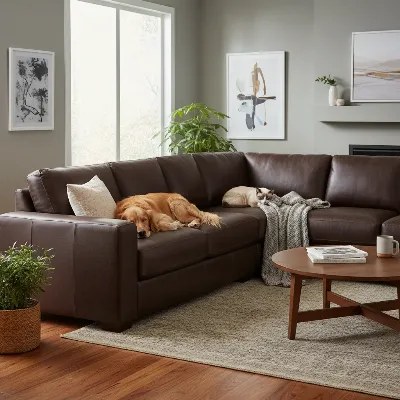 A cozy living room featuring a durable, dark brown leather sectional sofa, with a Golden Retriever and a Siamese cat comfortably lounging. The room is well-lit and modern, showcasing the sofa's resilient qualities for pet owners.
Key Factors to Consider When Buying a Pet-Friendly Leather Sectional Sofa
Choosing the right leather sectional involves more than just aesthetics; it requires a strategic approach to ensure it withstands the delightful chaos pets bring.
Leather Type and Finish
As established, the type of leather and its finish are paramount. Prioritize pigmented or semi-aniline top-grain leather. The protective coating on these leathers acts as a shield against the most common pet-related issues, offering superior resistance to scratches, stains, and moisture. This finish makes cleaning a breeze and ensures longevity. Pure aniline and nubuck leathers, while beautiful, are simply too vulnerable for an active pet household and should be avoided.
Durability and Scratch Resistance
A truly pet-friendly leather sectional boasts inherent durability. Look for leather that is dense and features a robust protective coating. While no material is entirely “scratch-proof” against determined claws, well-protected leather is significantly more resistant. It’s designed to absorb light scratches into its protective layer before they reach the hide, and any deeper marks tend to blend into the leather’s natural patina over time, becoming part of its character rather than unsightly damage.
Ease of Cleaning
With pets, easy cleanup is a non-negotiable feature. Leather naturally resists pet hair and odors because fur does not embed itself in the smooth surface. A quick wipe with a damp cloth or a pass with a lint roller is usually all it takes to remove hair. For spills and accidents, the non-porous nature of protected leather means liquids sit on the surface, allowing for quick blotting before they can stain. This ease of maintenance saves significant time and effort compared to many fabric alternatives.
Color Considerations
The color of your leather sectional plays a surprising role in its pet-friendliness. Mid-tone or darker colors like deep brown, navy, or black are excellent choices as they effectively camouflage small scratches, dirt, and minor marks. Very light leathers, such as white or cream, tend to highlight every paw print and scratch. Additionally, consider a color that is similar to your pet’s fur to help hide shedding. If your dog has light tan fur, a light tan sofa will naturally conceal shed hair better than a dark one.
Frame Construction
A solid and sturdy frame is crucial, especially when your pets enjoy enthusiastic jumps and zoomies on the furniture. Look for sectionals with solid wood frames, ideally kiln-dried hardwood, or robust metal constructions. These materials provide the stability and support needed to withstand the extra impact stress that active pets can exert, ensuring your sectional remains structurally sound for years.
Cushion Material
The right cushion material ensures both human and pet comfort while maintaining the sofa’s integrity. Firm, high-density foam cushions are preferable as they resist sagging and hold their shape better over time, even with consistent pet lounging. Removable and reversible cushions are a significant advantage, allowing for easier cleaning and the ability to rotate them to distribute wear evenly, extending the life of your sectional.
Modular Design
A modular sectional offers unparalleled flexibility, a highly desirable feature for pet owners. Its reconfigurable pieces allow you to easily adapt the layout to suit your changing needs, whether creating more lounging space for your pets or separating sections for thorough cleaning. This design also makes moving and rearranging the sofa much simpler, and in the event a single component is heavily damaged, it might be replaced without needing a whole new sofa.
Comparing Pet-Friendly Leather Sectional Sofa Options
When exploring the market for a pet-friendly leather sectional, several brands offer compelling choices. While specific models vary, here’s a general comparison of types commonly found and their advantages for pet owners.
The Homebaa Black Interface Genuine Leather Tufted Back Sectional, for instance, is highlighted for its genuine leather surface that wipes clean easily, making muddy paw prints and pet hair a non-issue. Its tufted seams can help disguise minor scratches, and the solid wood frame ensures longevity. Similarly, the Article Sven Leather Sofa has been noted as a pet-friendly leather option, often featuring full-aniline leather that develops a beautiful patina; however, owners of such pieces should be prepared for potential visible scratches, which some consider part of its authentic charm and aging process. Brands like West Elm also feature leather sectional options that can be considered, often offering various leather grades and finishes, so it’s essential to investigate the specific leather type when browsing.
| Feature | Pigmented Top-Grain Leather Sectional | Semi-Aniline Leather Sectional | PU Leather Sectional |
|---|---|---|---|
| Durability | Excellent (superior scratch and stain resistance) | Very Good (good scratch and stain resistance) | Moderate (prone to peeling/cracking over time) |
| Pet-Friendliness | High (easy to clean, hair doesn’t embed, odor resistant) | High (easy to clean, minimal odor absorption) | Medium (wipes clean easily, but less resistant to damage) |
| Maintenance | Easy (regular wiping, periodic conditioning) | Moderate (regular wiping, consistent conditioning) | Easy (wipes clean, less intensive conditioning needed) |
| Aesthetic | Uniform color, protected, consistent finish | Natural grain visible, richer color depth | Synthetic feel, highly uniform appearance |
| Price Point | Higher investment | Higher investment | More budget-friendly |
> “Choosing the right leather is like choosing a pet. You need to understand its character. Protected leathers are like loyal, low-maintenance companions, while more natural leathers are for those who appreciate a story told through every mark.” – Dr. Emily R. Thorne, Veterinarian & Interior Design Consultant
How to Buy the Perfect Pet-Friendly Leather Sectional
Purchasing a leather sectional is a significant investment, especially with pets. A thoughtful approach ensures you find a piece that truly fits your lifestyle.
- Assess Your Space and Needs: Before anything else, measure your living area. Consider the flow of traffic, existing furniture, and how your pets typically use the space. Do you need an L-shape for corner lounging, or a U-shape for maximum seating? How much space do your pets need to comfortably share the sofa?
- Define Your Budget: Leather sectionals vary widely in price based on leather quality, brand, and construction. Establish a realistic budget that balances your desired features with financial comfort. Remember, a higher initial investment in quality leather often pays off in long-term durability and less frequent replacement.
- Research Leather Types and Finishes: Revisit the information on leather types. Focus your search on pigmented or semi-aniline top-grain leathers, as these offer the best protection against pet-related wear. Understand the nuances between different finishes and how they will perform with your specific pets.
- Read Reviews from Pet Owners: Seek out product reviews specifically from individuals who own dogs or cats. Their real-world experiences can provide invaluable insights into how a particular sectional or leather type holds up against claws, fur, and spills.
- Inspect Construction: If possible, visit a showroom to physically inspect the sectional. Test the frame for sturdiness—it should feel solid with no wobbling. Check the cushion density and ensure they are removable for cleaning. Examine the stitching for quality and tightness.
- Consider Warranty and Return Policies: Understand the manufacturer’s warranty on both the frame and the leather. A good warranty indicates confidence in the product’s durability. Also, be aware of the return policy, especially for large furniture items, in case the sectional doesn’t meet your expectations once it’s in your home.
Maintaining Your Leather Sectional Sofa with Pets
Even the most durable pet-friendly leather sectional requires regular care to keep it looking its best. Consistent maintenance will extend its lifespan and preserve its beauty, even with the most energetic pets.
Regular Cleaning
Make regular cleaning a part of your routine. Vacuum your sectional weekly using a soft brush attachment to remove pet hair and dander from surfaces and crevices. Follow up by wiping the leather with a slightly damp, soft cloth to remove surface grime. For loose fur, an adhesive lint roller or a rubber glove can be surprisingly effective at gathering hair that settles on the leather.
Immediate Spill Cleanup
Accidents are inevitable, but quick action is key. If your pet has a spill or an accident, blot the area immediately with a clean, dry cloth. Never rub, as this can spread the stain or push it deeper into the leather. For more stubborn messes, use a leather-specific cleaner, gently dabbing the area. Avoid using harsh household cleaners, which can strip the leather’s protective finish or cause discoloration.
Nail Trimming
This is perhaps the simplest yet most crucial step in preventing scratches. Regularly trim your dog’s and cat’s nails to keep them blunt. Consider using a Dremel tool to smooth any sharp edges after trimming. Shorter, smoother nails significantly reduce the risk of accidental scratches or punctures on your leather sectional.
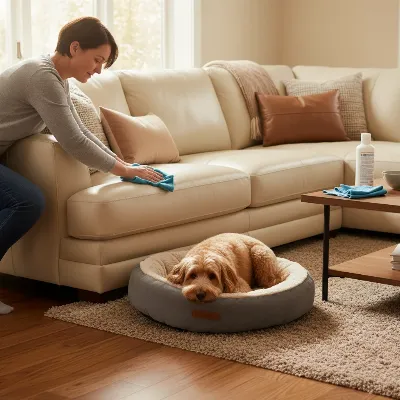 A person gently wiping a leather sectional sofa with a soft cloth while a small, well-groomed dog watches from a pet bed nearby, illustrating proper pet-friendly sofa maintenance.
Regular Conditioning
Leather needs to be moisturized to remain supple and prevent drying or cracking. Apply a high-quality leather conditioner every 6-12 months, or more frequently in dry climates or with heavy use. Conditioning replenishes the leather’s natural oils, enhancing its flexibility and making it more resistant to minor scratches and wear. Always test any new conditioner on an inconspicuous area first.
Protective Measures
While leather is durable, adding protective layers can further safeguard your sectional. Use throws, blankets, or dedicated pet covers on areas your pets frequent most. This creates a barrier against dirt, moisture, and even sharp claws, providing an extra layer of peace of mind. For very active or anxious pets, consider providing them with their own comfortable pet bed or blanket on the floor to encourage them to use that instead of the sofa.
Training
Gentle training can go a long way. Encourage your pets to avoid excessive scratching or chewing on the furniture. Positive reinforcement, along with providing appropriate scratch posts for cats and chew toys for dogs, can redirect these natural behaviors away from your valuable sectional.
Avoid Harsh Cleaners
Steer clear of ammonia-based cleaners, abrasive scrubs, or harsh chemical sprays. These can damage the leather’s finish, leading to irreversible harm. Stick to pH-balanced leather cleaners and follow the manufacturer’s recommendations for any cleaning products. For pet accidents, specifically formulated enzymatic cleaners for pet odors and stains can be effective on leather if used according to instructions, ensuring no lingering smells that might encourage repeat offenses.
Conclusion
Choosing the best leather Sectional Sofa for your home with dogs and cats in 2026 doesn’t mean compromising on style or comfort. By focusing on protected genuine leathers like pigmented or semi-aniline top-grain, prioritizing solid construction, and committing to a routine of proactive maintenance, you can create a luxurious yet resilient living space for everyone. A well-chosen leather sectional will not only withstand the playful antics of your beloved pets but will also age gracefully, developing character that tells the unique story of your shared life. Invest wisely, maintain diligently, and enjoy a harmonious home where both humans and furry friends can lounge in ultimate comfort. What will be your first family movie night on your new pet-friendly leather sectional?
Frequently Asked Questions
Is leather truly scratch-proof for pets?
No material is entirely scratch-proof, but protected genuine leathers (like pigmented or semi-aniline top-grain) are highly scratch-resistant. Their protective coatings make it difficult for claws to catch and often blend minor marks into the leather’s natural patina, looking like character rather than damage.
How often should I clean my leather sectional with pets?
You should vacuum your leather sectional weekly and wipe it down with a damp cloth to remove surface grime and pet hair. For spills or accidents, clean them immediately. Apply a good leather conditioner every 6-12 months to keep the leather supple.
Can I use regular household cleaners on my leather sofa?
No, it’s strongly recommended to avoid regular household cleaners, especially those with harsh chemicals, ammonia, or abrasives. These can damage the leather’s protective finish and cause discoloration. Always use pH-balanced, leather-specific cleaners or conditioners.
What’s the best color leather to hide pet hair and scratches?
Mid-tone to darker colors like deep browns, grays, or blacks are generally best for hiding minor scratches and dirt. Choosing a color similar to your pet’s fur can also help camouflage shedding, making your sectional look cleaner between cleanings.
Are modular leather sectionals better for pet owners?
Yes, modular leather sectionals offer excellent flexibility. Their reconfigurable pieces allow for easy rearrangement to suit pet lounging habits or accommodate cleaning. If one section becomes heavily worn or damaged, it can sometimes be replaced independently, extending the overall life of the sofa.