Few things are as inviting as a plush, comfortable sectional sofa, the heart of many living rooms, offering ample space for relaxation and gathering. However, over time, even the most beloved sectional can start to show signs of wear, particularly in its cushions. That sinking feeling when you sit down, the noticeable indentations, and the overall loss of shape can quickly transform your cozy haven into an uncomfortable eyesore. Before you consider replacing your entire sectional, understand that most sagging cushion issues can be effectively resolved with a few DIY fixes. This comprehensive guide will walk you through diagnosing the problem and implementing practical, cost-effective solutions to bring back the bounce and comfort to your sectional sofa.
Understanding Why Your Sectional Sofa Cushions Sag
The gradual decline in your sectional sofa’s comfort isn’t just an illusion; it’s a direct result of various factors impacting its structure and materials. Understanding these causes is the first step toward a successful repair.
At its core, cushion sagging often stems from the compression of foam or filling due to consistent use. Over months and years, the internal materials lose their resilience and ability to spring back, leading to a flattened appearance and diminished support. This issue is often exacerbated by low-quality foam that lacks the density to withstand prolonged pressure, breaking down faster than premium alternatives. Beyond the cushions themselves, the sofa’s internal support structure can also be a culprit. Weakened or broken springs, loose webbing, or even a compromised frame can cause the base beneath the cushions to sag, creating a hollow void that exacerbates cushion flattening. Furthermore, stretched fabric covers can contribute to the problem by no longer holding the cushion filling tightly, allowing it to spread and lose its compact shape. Less common factors like moisture exposure can also weaken internal structures over time.
Diagnosing the precise cause is crucial for choosing the right repair. Start by removing the cushions from your sectional and inspecting them individually. Are they visibly flattened, or has the internal filling shifted unevenly? Next, examine the sofa’s base where the cushions normally rest. If the base feels firm and sturdy, your problem likely lies within the cushions themselves. However, if the base itself sags, or you can feel broken springs or loose webbing, then the structural support beneath the cushions needs attention. Pay close attention to individual seat sections, as uneven wear often points to a specific cushion or a localized support issue rather than a widespread problem.
Essential Tools and Materials for Cushion Repair
Before you embark on your sectional sofa repair project, gathering the necessary tools and materials will ensure a smooth and efficient process. Most items are readily available at craft stores, hardware stores, or online.
Tools:
- Measuring Tape: Crucial for accurately sizing foam or plywood inserts.
- Fabric Scissors: Sharp scissors are essential for cutting foam, batting, or any fabric.
- Seam Ripper: Handy for gently opening cushion seams if there isn’t a zipper or for minor upholstery repairs.
- Upholstery Needle and Heavy-Duty Thread: Necessary if you need to sew seams closed or reinforce internal fabric.
- Utility Knife or Electric Foam Cutter: For precise cuts when working with denser foam.
- Pliers or Spring Hook: If you suspect issues with the sofa’s springs.
- Staple Gun (optional): For reinforcing webbing or fabric on the sofa frame, if required.
Materials:
- High-Density Foam: The primary material for replacing or reinforcing cushion cores. Look for foam designed for seating that offers good resilience and longevity.
- Polyester Fiberfill / Batting / Dacron Wrap: Used to add loft, soften the feel of new foam, or fill out cushion covers for a plumper look. Dacron wrap is often used to encase foam inserts, giving them a smoother profile and making them easier to slide into covers.
- Plywood or Particleboard: A thin sheet (typically 1/4 to 1/2 inch thick) used to reinforce a sagging sofa base beneath the cushions.
- Fabric Glue (optional): For minor fabric repairs if sewing is not preferred or necessary.
Choosing high-density foam is a worthwhile investment, as it provides superior support and lasts significantly longer than lower-density options, preventing a quick return to the sagging problem. Similarly, opting for quality batting or fiberfill will ensure your cushions maintain their shape and comfort for an extended period.
Step-by-Step DIY Solutions for Sagging Sectional Sofa Cushions
Addressing sagging cushions can range from quick, simple fixes to more involved replacements. Here’s how to tackle them progressively.
1. Simple Fluffing and Rotation
Table is empty.Sometimes, your sectional sofa cushions just need a little TLC to regain their former glory. Regular fluffing and rotation are preventative measures that can also offer a quick fix for minor sagging.
To effectively fluff your cushions, remove them from the sectional. Give each cushion a good shake and a few firm pats or punches to redistribute the internal filling, breaking up any compacted material. This is particularly effective for cushions filled with feathers or loose fiberfill. For foam cushions, while fluffing might be less impactful, rotating them is key.
Rotate and flip your cushions every few months, or more frequently if your sectional sees heavy use. If you have “favorite spots,” constantly sitting in the same area causes uneven compression. By rotating cushions—moving them from one seat to another, or flipping them over—you ensure that different sections bear the weight, allowing previously compressed areas to recover and maintain their shape more evenly. This simple habit can significantly extend the life and comfort of your sectional sofa.
2. Boosting Firmness with Extra Filling
If fluffing and rotation aren’t enough, your cushions might benefit from additional stuffing to restore their volume and firmness. This method is effective when the existing foam or filling is still in decent shape but has lost some of its plumpness.
Start by locating the zipper on your cushion cover. If there isn’t one, you might need to carefully open a seam with a seam ripper, remembering that you’ll need to sew it back up later. Once the cover is open, gently pull out the existing foam insert. If it’s wrapped in batting or netting, leave that intact if possible.
Now, strategically add new polyester fiberfill or batting around the existing foam insert. You can wrap the foam with layers of batting, focusing on areas that feel particularly soft or deflated. Alternatively, you can directly stuff handfuls of fiberfill into the cushion cover around the foam, ensuring an even distribution. The goal is to fill any empty spaces within the cover, making the cushion feel denser and more supportive. Once you’ve added the desired amount of filling, carefully slide the foam and new padding back into the cushion cover. Zip it up (or sew the seam), and gently pat and reshape the cushion to ensure it looks uniform. This technique can breathe new life into older cushions, making them feel significantly firmer and more comfortable.
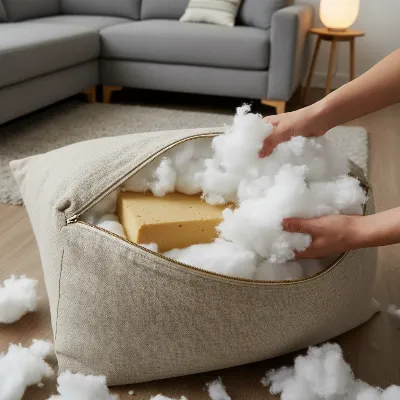 Adding fiberfill to a sectional sofa cushion to restore firmness
3. Replacing or Reinforcing Foam Inserts
For severely sagged cushions, or those where the existing foam has completely lost its integrity, replacing the foam insert or reinforcing it with a new layer is often the most effective long-term solution.
When to Replace: If your existing foam is crumbling, deeply indented, or no longer provides any support, a full replacement is recommended.
When to Reinforce: If the foam is still somewhat intact but has softened considerably, adding a high-density foam layer beneath or around the existing foam can significantly boost firmness.
To replace, carefully remove the old foam from the cushion cover. Measure the dimensions of the cover accurately (length, width, and depth, pulling the fabric taut). Order or cut a new piece of high-density foam to these exact measurements. Many suppliers can cut foam to size for you. For added comfort and a smoother finish, consider wrapping the new foam insert in a layer of Dacron batting before inserting it into the cover. Dacron helps the foam slide in easily and prevents the cover from looking too angular.
To reinforce, you can either:
- Add a bottom layer: Cut a thin sheet (1-2 inches thick) of high-density foam to the size of your cushion. Insert it into the bottom of the cushion cover, then place your original foam insert on top.
- Wrap the existing foam: If the original foam is still structurally sound but soft, you can wrap it tightly with a new, denser foam sheet cut to size, securing it with spray adhesive if needed.
Carefully slide the new or reinforced foam assembly back into the cushion cover, ensuring it fits snugly. Zip or sew the cover shut, and then reshape the cushion. This method provides robust, lasting support, transforming your sectional’s comfort.
4. Reinforcing the Sofa’s Base Support
Sometimes, the problem isn’t just the cushions, but the underlying structure of your sectional sofa. If you’ve diagnosed that the base of your sofa is sagging—meaning the area beneath the removable cushions is weak—then addressing this foundation is crucial.
The most common DIY fix for a sagging base is to add a layer of plywood or particleboard. First, remove all cushions from the affected area of the sectional. Measure the exact length and width of the platform where the cushions normally rest. Cut a piece of plywood or particleboard to these precise dimensions. The thickness can vary, but typically 1/4 to 1/2 inch is sufficient to provide a rigid, supportive surface. Place this cut board directly onto the sofa’s frame, under where the cushions sit. Once the board is in place, return the cushions to the sectional. The plywood provides a solid, even foundation, preventing the cushions from sinking into any weak spots in the webbing or springs.
Alternatively, you can purchase pre-made cushion supports. These are rigid or semi-rigid panels designed to slide directly under your cushions, offering an instant lift and preventing the sinking sensation. They are a quick and easy solution, especially if you prefer not to cut plywood.
If you inspect the base and find that the problem is specifically loose or broken springs or stretched webbing, this can be a more complex repair. Loose webbing can sometimes be re-tightened and stapled back into place using an upholstery stapler. Broken springs, however, often require specialized tools and knowledge. While some DIY enthusiasts might attempt spring repair or replacement, it’s typically an area where calling a professional upholsterer might be more practical to ensure the structural integrity of your sectional.
Maintaining Your Sectional Sofa to Prevent Future Sagging
Once you’ve successfully revived your sectional sofa cushions, implementing a consistent maintenance routine is essential to prevent future sagging and extend the lifespan of your furniture. Proactive care is always more effective than reactive repairs.
One of the simplest yet most effective practices is regular rotation and flipping of cushions. Aim to do this every few weeks, or at least monthly, especially for high-traffic areas. By rotating your cushions (e.g., swapping them between different seats) and flipping them over, you ensure that wear and tear are distributed evenly across all surfaces. This prevents any single area from bearing the brunt of pressure and compression, allowing the cushion materials to recover their loft and shape over time.
Additionally, mindful seating practices can make a significant difference. Encourage family members and guests to avoid always sitting in the exact same spot. Spreading the weight and varying sitting positions reduces concentrated pressure on specific areas, further mitigating uneven wear and sagging. Regularly fluffing your cushions by giving them a good shake and pat can also help redistribute internal fillings like fiberfill or feathers, maintaining their plumpness and preventing clumping.
Finally, when initially purchasing a sectional sofa, investing in quality materials can pay dividends in longevity. Sofas with high-density foam cores, robust support systems (like sturdy spring construction or strong webbing), and durable upholstery fabrics are less prone to premature sagging. While they might have a higher upfront cost, they will offer sustained comfort and support, reducing the need for frequent DIY interventions.
Conclusion
Reviving a sagging sectional sofa is a rewarding DIY project that can significantly extend the life and comfort of your furniture without the expense of a full replacement. By understanding the common causes of sagging—from compressed foam to weakened support structures—you can effectively diagnose the problem and apply targeted solutions. Whether it’s a simple matter of fluffing and rotating cushions, adding extra batting for a firmer feel, replacing old foam inserts with high-density alternatives, or reinforcing a sagging base with plywood, these practical steps empower you to restore your sectional to its former glory. Consistent maintenance through regular rotation, mindful seating, and choosing quality materials will ensure your sectional sofa remains a comfortable and inviting centerpiece in your home for years to come. What step will you take first to bring the bounce back to your beloved sectional?
Frequently Asked Questions
Can I fix sagging cushions without replacing the foam entirely?
Yes, you can often fix sagging cushions without full foam replacement by adding extra polyester fiberfill or batting around the existing foam insert to restore volume and firmness, or by placing a thin layer of high-density foam beneath the original insert for added support.
How often should I rotate and flip my sectional sofa cushions?
It is recommended to rotate and flip your Sectional Sofa cushions every few weeks to a month, especially in high-traffic areas, to ensure even wear and help the cushion materials maintain their shape and resilience.
What type of foam is best for replacing sagging sofa cushions?
High-density foam (often rated with a higher ILD or density number) is generally considered the best choice for replacing sagging sofa cushions because it offers superior support, durability, and a longer lifespan compared to lower-density alternatives.
When should I consider calling a professional to fix my sectional sofa?
You should consider calling a professional upholsterer if the sagging is due to complex issues like broken internal springs, a compromised wooden frame, or if you are uncomfortable performing the necessary repairs yourself, particularly if they involve intricate upholstery work beyond simple cushion stuffing.