Choosing the perfect sectional sofa can transform your living space, making it a hub of comfort and style. As an administrator with over a decade of experience in interior design, especially with sofas, I’ve seen how these versatile pieces have evolved. Among the most popular configurations, L-shaped and U-shaped sectionals stand out, each offering unique advantages and catering to different needs. Understanding their distinct characteristics, from space optimization to seating capacity and aesthetic impact, is crucial for making an informed decision. This comprehensive guide will delve into these differences, explore key buying considerations, and provide maintenance tips, ensuring you select the ideal sectional to enhance your home for years to come.
Sectional Sofa: The Ultimate Guide to Choosing Your Perfect Fit
Sectional sofas are renowned for their adaptability and ability to maximize seating in various room layouts. Their modular design, allowing for different configurations, makes them a highly sought-after furniture piece in modern homes. Understanding the primary types—L-shaped and U-shaped—is the first step towards finding your perfect match.
Popular Types of Sectional Sofas
Table is empty.Sectional sofas are fundamentally modular seating arrangements, designed to offer flexibility and ample lounging space. While many types exist, the L-shaped and U-shaped configurations are the most common and distinct.
An L-shaped sectional typically consists of two main pieces joined to form a right angle, creating an “L” silhouette. These are often composed of a sofa paired with a chaise lounge or another sofa segment. They are celebrated for their ability to fit snugly into corners, optimizing floor space while still providing significant seating. L-shaped sectionals are particularly suitable for small to medium-sized living rooms, apartments, or open-concept layouts where they can help define a distinct seating zone without overwhelming the area. They usually seat between three to five people comfortably.
In contrast, a U-shaped sectional features three or more connected pieces that create a “U” formation, essentially offering a central open area flanked by seating on three sides. This configuration provides the maximum amount of seating, making it ideal for larger living rooms, open-plan homes, or dedicated entertainment spaces. U-shaped sectionals can comfortably accommodate six or more people, fostering an intimate and inclusive conversational environment. However, they demand a substantial footprint and are less flexible for rearrangement in smaller spaces. Modular sectionals, which can be rearranged into various shapes including L or U, offer the most versatility for evolving needs and room layouts.
Key Factors to Consider When Buying a Sectional Sofa
Selecting a sectional involves more than just picking a shape; several critical factors influence its long-term suitability and satisfaction. Deliberating on these elements ensures your investment aligns perfectly with your lifestyle and home.
The size and available space in your living room are paramount. Before anything else, meticulously measure your room dimensions, including doorways and hallways for delivery access. An L-shaped sectional thrives in smaller spaces, fitting neatly into corners or against a wall, leaving ample room for other furniture and foot traffic. U-shaped sectionals, due to their expansive nature, require a larger footprint and are best placed in spacious rooms where they can command attention without making the area feel cramped. Consider the flow of traffic around the sofa and ensure there’s enough clearance.
Material choice significantly impacts both the aesthetic and durability of your sectional. Popular options include fabric, leather, and microfiber. Fabric sectionals offer a vast array of colors and textures, often providing a cozier feel. Durable fabrics like linen, cotton, or performance fabrics (which are stain-resistant) are excellent for homes with pets or children. Leather sectionals exude luxury and are incredibly durable, developing a unique patina over time, though they tend to be pricier. Microfiber is a synthetic option known for its softness, stain resistance, and ease of cleaning, making it a practical choice for busy households.
The frame construction is the backbone of your sectional, determining its longevity. Opt for frames made from kiln-dried hardwood (like oak, maple, or birch) or strong metal, as these materials offer superior stability and resistance to warping. Avoid frames made from particleboard or softwoods, which tend to be less durable over time. Joints should be reinforced with dowels, screws, or corner blocks, not just glue or staples.
Cushioning affects comfort and support. High-density foam is a common choice, offering firm support and retaining its shape well. Down-filled cushions provide a softer, more luxurious feel but require more frequent fluffing to maintain their shape. A combination of foam and down (often referred to as “feather-wrapped foam”) offers a balance of support and plushness. Spring systems, such as sinuous springs or coil springs, also contribute to the overall support and longevity of the seating.
Finally, the style and color of your sectional should complement your existing decor. L-shaped sectionals often suit modern, minimalist, or contemporary interiors due to their sleek lines. U-shaped sectionals, with their grander presence, can enhance traditional or luxurious aesthetics. Neutral colors offer versatility and longevity, easily paired with various accent colors through pillows and throws, while bold colors can serve as a striking focal point. Consider your overall design theme and personal preference to ensure harmony in your living space. Additionally, budgeting is key; L-shaped sectionals are generally more affordable, while U-shaped ones, being larger and often featuring more premium elements, typically come at a higher price point.
Comparing L-Shape vs. U-Shape Sectionals in Detail
Understanding the direct comparison between L-shaped and U-shaped sectionals is crucial for identifying which configuration best serves your household’s unique needs and spatial constraints.
| Feature | L-Shape Sectional | U-Shape Sectional |
|---|---|---|
| Space Requirement | Less; ideal for corner placements and smaller to medium-sized rooms, optimizing floor space. | More; requires a larger footprint, best suited for spacious, open-plan living areas where it can be a focal point. |
| Seating Capacity | Typically seats 3-5 people comfortably, depending on size. | Comfortably seats 6+ people, making it ideal for large families or frequent entertaining. |
| Versatility & Flexibility | More versatile; easier to rearrange or move in smaller spaces, and can be used to define open areas subtly. | Less flexible for rearrangement due to its expansive size; generally intended for a more fixed, dedicated seating arrangement. |
| Social Interaction | Creates a defined corner or open seating area, suitable for intimate conversations or stretching out. | Enclosed and intimate, naturally encourages conversation and a cozy, all-around social environment. |
| Cost | Generally more affordable due to smaller size and fewer components. | Usually more expensive due to its larger size, more components, and often enhanced features. |
| Aesthetic Impact | Sleek and streamlined, often suiting minimalist, modern, or contemporary decor. Can make a room feel more open. | Grand and commanding, often enhancing traditional, luxurious, or grand interiors. Creates a warm, encompassing atmosphere. |
> “The choice between an L-shaped and U-shaped sectional fundamentally boils down to your living habits and the spatial dynamics of your home. It’s not just about size, but how you envision using the space.” – Sarah Chen, Senior Interior Designer at Veridian Interiors.
Sectional Sofa Buying Guide
Navigating the market for a new sectional sofa can be exciting. By following a structured approach, you can ensure a purchase that brings comfort and joy for years.
First, determine your specific needs and budget. Consider who will be using the sofa most often—a small family, a couple, or someone who frequently hosts large gatherings? This will inform your seating capacity requirements. Establish a realistic budget that encompasses the sofa, delivery fees, and any necessary accessories. Remember that quality often comes with a higher price tag, but it also ensures longevity.
Next, thoroughly research product information. Read reviews, compare features, and look for detailed specifications regarding materials, construction, and dimensions. Pay attention to warranty information and return policies before making a commitment. Reliable brands will provide transparent details about their products.
Whenever possible, visit a physical store to experience the sectional directly. Sitting on a sofa allows you to assess its comfort, the firmness of the cushions, and the feel of the upholstery. Don’t be shy about testing various seating positions, from lounging to sitting upright, to ensure it meets your comfort expectations. This hands-on experience is invaluable and cannot be replicated online.
Before finalizing your purchase, meticulously inspect the quality of the product. Check the stitching for consistency, ensure all components fit together snugly, and test any moving parts like recliners or pull-out beds. A well-constructed sectional should feel sturdy and exhibit attention to detail.
While not always applicable, consider negotiating the price, especially during sales events or if purchasing multiple items. Many furniture retailers offer promotions or discounts that can save you a significant amount. Always read the warranty and return policy carefully before signing any agreements. Understand what is covered, for how long, and the process for making a claim or returning an item if necessary.
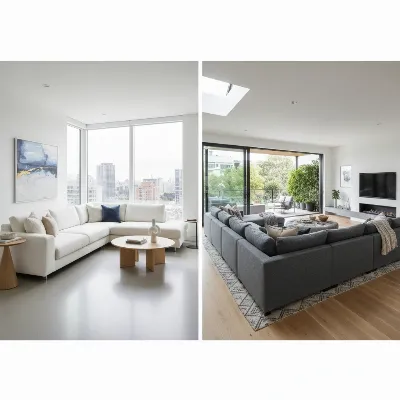 L-shaped and U-shaped sectional sofas in different living room settings with modern decor
How to Maintain Your Sectional Sofa
Proper maintenance is key to preserving the beauty and extending the lifespan of your sectional sofa. Regular care can prevent premature wear and keep it looking new.
Regular cleaning is the simplest yet most effective maintenance step. Vacuum your sectional weekly using an upholstery attachment to remove dust, crumbs, and pet hair. This prevents debris from embedding in the fabric fibers, which can cause abrasion and dullness over time. For leather sectionals, a soft, dry cloth can be used for dusting.
Avoid direct sunlight exposure, as UV rays can cause fabric colors to fade and leather to dry out and crack over time. Position your sectional away from windows or use curtains and blinds to shield it during peak sunlight hours. Rotating cushions regularly can also help distribute wear evenly and prevent permanent indentations.
When spills occur, it’s crucial to use suitable cleaning agents for your specific upholstery material. Always check the care label on your sectional (usually found under a cushion) for cleaning codes (e.g., “W” for water-based cleaners, “S” for solvent-based, “WS” for both, “X” for vacuum only). Test any cleaning solution on an inconspicuous area first to ensure it doesn’t cause discoloration or damage.
Address spills and stains promptly. Blot, don’t rub, liquid spills with a clean, white cloth to absorb as much moisture as possible. For solid stains, gently scrape off any excess before cleaning. Timely action can prevent stains from setting in and becoming more difficult to remove.
Finally, consider periodic professional maintenance, especially for high-traffic sectionals or delicate materials. Professional upholstery cleaners have the expertise and equipment to deep-clean your sofa without damaging the fabric, extending its life and restoring its appearance. This is particularly beneficial every 1-2 years, depending on usage.
Conclusion
Choosing between an L-shaped and U-shaped sectional sofa hinges on a blend of practical considerations and personal preferences. L-shaped sectionals are champions of space-saving efficiency and versatility, fitting effortlessly into cozier rooms while still offering generous seating. U-shaped sectionals, on the other hand, are the epitome of expansive comfort, perfect for grand living areas and fostering lively social gatherings. Both styles promise to elevate your home’s aesthetic and provide a central hub for relaxation. By carefully assessing your space, lifestyle, and design aspirations against the unique attributes of each, you can confidently select the sectional that will serve as the heart of your home in 2026 and beyond. Which configuration speaks most to your dream living room?
Frequently Asked Questions
What is the primary difference between L-shaped and U-shaped sectional sofas?
The primary difference lies in their shape and size; L-shaped sectionals form a right angle, typically fitting into corners and seating 3-5 people, making them ideal for smaller spaces. U-shaped sectionals form a “U” shape, offering more expansive seating for 6+ people, best suited for large living rooms and creating an inclusive social zone.
How do I measure my room to ensure a sectional sofa will fit?
To measure your room, first, sketch your living space, noting windows, doors, and other furniture. Measure the total length and width of the area where you intend to place the sectional. Also, measure doorways, hallways, and stairwells to ensure the sectional pieces can be delivered without issue. Mark the sectional’s dimensions on the floor with tape to visualize its footprint.
Can an L-shaped sectional sofa fit in a small apartment?
Yes, L-shaped sectional sofas are often an excellent choice for small apartments. Their design allows them to tuck neatly into corners, maximizing seating without consuming excessive floor space. Many L-shaped models also come with modular options, making them adaptable to compact living areas.
Are sectional sofas good for families with children or pets?
Sectional Sofas can be great for families with children or pets, especially if you choose durable, stain-resistant fabrics like microfiber or performance fabrics. Their ample seating provides space for everyone to lounge comfortably, making them ideal for family movie nights and casual gatherings. Regular cleaning is essential for maintaining their condition.
How do I choose the right material for my sectional sofa?
Choosing the right material depends on your lifestyle and aesthetic preferences. Durable fabrics like linen or cotton blends are comfortable and versatile. Performance fabrics offer excellent stain and wear resistance, perfect for high-traffic homes. Leather provides a luxurious look and long-lasting durability but requires specific care. Consider ease of cleaning and overall feel.