Sectional sofas have revolutionized modern living spaces, becoming the cornerstone of comfort and versatile design. They effortlessly blend functionality with style, providing ample seating and adapting to diverse room layouts. From cozy family gatherings to lively entertaining, a well-chosen sectional can transform an ordinary room into an inviting sanctuary. However, navigating the world of sectional sofas, especially understanding terms like “left-facing” and “right-facing,” can often be a source of confusion for many homeowners.
With their modular flexibility and generous proportions, sectional sofas offer unparalleled opportunities to create a living area perfectly tailored to your lifestyle. Yet, a fundamental decision—the orientation of the sofa’s extended sections—can dramatically impact traffic flow, aesthetic balance, and overall functionality. This comprehensive guide will demystify the essential terminology, explore popular configurations, delve into critical buying considerations, and provide practical advice for selecting and maintaining the ideal sectional for your home. By understanding these nuances, you can confidently choose a sectional sofa that not only fits your space but enhances your daily living experience.
Sectional Sofas: Your Guide to a Perfect Purchase
Understanding Left-Facing vs Right-Facing Sectional Sofas
Table is empty.The terms “Left-Arm Facing (LAF),” “Right-Arm Facing (RAF),” “Left-Hand Facing (LHF),” and “Right-Hand Facing (RHF)” are crucial when selecting a sectional sofa. These designations define the orientation of the sofa’s components, typically the armrest or the extended section like a chaise, from the perspective of someone facing the furniture, not sitting on it. This perspective is vital for correctly visualizing how the sectional will fit into your room.
To identify a sectional’s orientation, simply stand in front of the sofa and look directly at it. If the armrest of a specific piece, or the longer extended section (such as a chaise), is on your left-hand side, it is considered Left-Arm Facing (LAF) or Left-Hand Facing (LHF). Conversely, if that same element appears on your right-hand side, the piece is Right-Arm Facing (RAF) or Right-Hand Facing (RHF). This simple rule ensures clarity, preventing common ordering mistakes that can lead to a sectional that doesn’t align with your room’s layout.
Understanding these terms is paramount because the orientation profoundly influences room layout, traffic patterns, and the placement of other furniture. An incorrectly oriented sectional can obstruct doorways, create awkward walkways, or clash with existing design elements like a television or fireplace. Furthermore, knowing the correct LAF or RAF configuration is essential when purchasing accessories such as slipcovers or protective shields, as these are often designed for specific orientations to ensure a snug and polished fit. Taking the time to correctly identify your desired facing is the first step towards a harmonious living space.
Popular Types of Sectional Sofas
Sectional sofas come in various shapes and configurations, each offering distinct advantages for different room sizes and lifestyle needs. Understanding these common types can help you envision the best fit for your home.
L-shaped sectionals are perhaps the most popular configuration, designed to fit snugly into corners or define open-plan spaces. They typically consist of a sofa component and a chaise or a shorter sofa return, forming an “L” shape. These sectionals are excellent for maximizing seating in a corner, providing a cozy lounging spot, and creating a natural boundary within a larger room without completely closing it off. While efficient for space utilization, ensuring the “L” faces the correct direction (LAF or RAF) is crucial to maintain proper traffic flow and avoid blocking architectural features.
U-shaped sectionals offer the most expansive seating capacity, forming a “U” shape with a central seating area flanked by two extended arms or chaises. Ideal for larger families or those who frequently entertain, these sectionals foster intimate conversations by bringing everyone closer. They act as a grand centerpiece, providing ample space for lounging, but require a significant footprint. Due to their size, U-shaped sectionals are best suited for spacious living rooms where they won’t overwhelm the area or impede movement.
Modular sectionals provide the ultimate in flexibility and customization. Comprising individual, unattached pieces like armless chairs, corner units, ottomans, and chaises, these sectionals can be rearranged into countless configurations. This adaptability makes them perfect for renters, individuals who enjoy redecorating often, or those with unique room shapes that traditional sofas cannot accommodate. While offering unparalleled versatility, modular sets can sometimes appear less cohesive than fixed-frame sectionals if not arranged thoughtfully, and their individual pieces may require occasional realignment.
Chaise sectionals are a specific variation, often part of L-shaped or modular designs, featuring an elongated seat that allows you to stretch out your legs. The chaise typically replaces one arm of a standard sofa, providing a luxurious spot for relaxation or an additional, informal seat. The key decision with a chaise sectional is its orientation—whether it is Left-Hand Facing (LHF) or Right-Hand Facing (RHF) as you stand in front of it. This choice profoundly impacts room flow and how you interact with the rest of your living space.
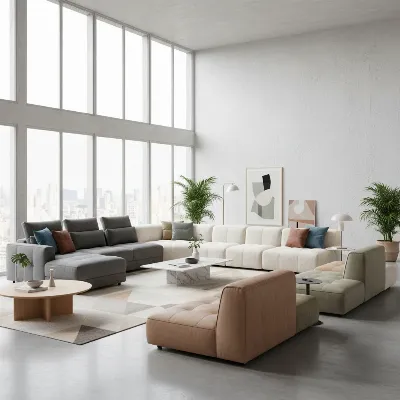 Various types of sectional sofas, including L-shaped, U-shaped, and modular designs, in a modern living room setting
Essential Factors When Buying a Sectional Sofa
Choosing the perfect sectional sofa involves more than just selecting a style; it requires careful consideration of several practical factors to ensure it meets your needs for comfort, durability, and aesthetics.
Size and Room Layout are perhaps the most critical considerations. Before shopping, accurately measure your living space, including doorways, hallways, and stairs to ensure the sectional can be delivered and assembled. Use painter’s tape on the floor or a room planning app to visualize the sectional’s footprint. Consider traffic flow around the sofa, ensuring it doesn’t block essential pathways or overwhelm the room. Think about focal points like a television, fireplace, or large windows; the sectional’s orientation should complement these features, providing comfortable viewing angles or enhancing natural light. A right-facing sectional might frame a fireplace beautifully, while a left-facing one could align perfectly with a window view.
The Upholstery Material significantly impacts both the look and longevity of your sectional.
- Fabric options like polyester, linen, and microfiber offer a vast array of colors and textures. Polyester is known for its durability, resistance to wrinkles and fading, and ease of cleaning, making it a practical choice for busy households. Linen provides a breathable, relaxed feel but may be more prone to wrinkles and stains. Microfiber offers a soft, suede-like touch, is often stain-resistant, and relatively easy to maintain, making it a favorite for homes with pets or children.
- Leather (full-grain, top-grain, or corrected/bonded) exudes luxury and is highly durable, often aging beautifully over time. Full-grain leather is the most durable, showcasing natural characteristics, while top-grain is slightly refined. Leather is generally easy to wipe clean but can be susceptible to scratches and temperature changes, feeling cool in winter and warm in summer.
- Performance fabrics are engineered to resist spills, stains, and wear, ideal for high-traffic areas or homes with active lifestyles. These blends often offer the best of both worlds: the comfort and aesthetic appeal of fabric with enhanced resilience.
The Frame Construction is the backbone of your sectional’s durability. Look for frames made from kiln-dried hardwood (like oak, maple, or birch) or strong, reinforced metal. Kiln-drying prevents warping and cracking, ensuring the frame remains stable over time. Avoid frames made solely from particleboard or softwoods, as these are less durable and may compromise the sofa’s structural integrity. Well-constructed frames often feature corner blocks, dowels, or screws, rather than just staples or glue, for added strength.
Cushion Fill determines the comfort level and how well the cushions retain their shape.
- High-density foam provides firm support and excellent shape retention, making it a durable choice that doesn’t require constant fluffing.
- Down or feather fills offer a plush, sink-in comfort, but they tend to flatten and require regular fluffing to maintain their loft and appearance.
- Many quality sectionals use a combination of foam core wrapped in down or synthetic fibers to provide both support and softness.
- Consider also the spring system, such as sinuous springs or individually pocketed coils, which contribute to even support and long-term comfort.
Finally, Style and Color should align with your existing home decor and personal taste. A sectional is often the largest piece of furniture in a living room, so its aesthetic impact is significant. Consider whether you prefer a sleek, modern design, a cozy traditional look, or something in between. Neutral colors offer versatility and longevity, while bold hues can make a statement. Remember that lighter colors may show stains more readily, impacting maintenance.
Reputable Sectional Sofa Brands
The market for sectional sofas is vast, with numerous brands offering a range of styles, materials, and price points. While specific recommendations can vary based on individual needs and evolving product lines, several brands consistently receive recognition for their quality, design, and customer satisfaction.
Brands like Article and Castlery are often praised for their modern, design-forward aesthetics and good value, appealing to those seeking contemporary styles at accessible price points. They typically offer a curated selection of popular configurations and materials, though lead times and the ability to physically test furniture might be limited for some online-focused models.
For those prioritizing premium quality, extensive customization, and heirloom-level durability, brands such as Crate & Barrel and Interior Define are frequently highlighted. These brands often feature higher-grade materials, sophisticated designs, and options for customizing fabric, color, and configuration, allowing you to create a truly bespoke piece. The investment is higher, and lead times can be longer, but the longevity and tailored fit are significant advantages.
On the more budget-friendly end, options from Ikea or various retailers on platforms like Amazon provide affordable and often quick-ship solutions. These can be excellent choices for temporary living situations, first-time homeowners, or those with tighter budgets. While customization might be limited and the long-term durability can vary, they offer practical solutions for immediate seating needs. Other notable mentions from consumer feedback include JoyBird for its customizable, comfortable pieces, and Lovesac for its highly modular and durable “Sactionals” which are designed to adapt to various spaces over time.
Choosing a reputable brand involves looking beyond just the price tag. Consider their reputation for customer service, the availability of swatches to test materials, comprehensive warranties, and clear return policies, all of which contribute to a confident purchase.
| Brand Category Example | Advantages | Disadvantages | Price Range (General) |
|---|---|---|---|
| Budget-Friendly (e.g., Ikea, select Amazon options) | Highly affordable, quick delivery, good for temporary needs | Limited customization, varied long-term durability | Low |
| Mid-Range (e.g., Article, Castlery) | Modern designs, good balance of quality and value, some customization | Lead times can vary, primarily online shopping experience | Medium |
| Premium (e.g., Crate & Barrel, Interior Define) | High-quality materials, extensive customization, superior durability | Higher price point, longer lead times for custom orders | High |
Guide to Purchasing Your Sectional Sofa
Making an informed decision when buying a sectional sofa involves a systematic approach to ensure you select a piece that brings both comfort and lasting satisfaction to your home.
First, assess your needs and define your budget. Consider who will be using the sofa, how frequently, and for what activities (lounging, entertaining, watching TV). This will help you prioritize features like deep seating, durable fabric, or power recline. Establish a realistic budget, remembering that a sectional is a significant investment, and quality often correlates with longevity. Don’t forget to factor in potential delivery and assembly costs.
Next, research thoroughly and compare products. Utilize online resources to explore different styles, materials, and configurations. Read customer reviews for insights into real-world comfort, durability, and customer service experiences. Many brands offer free fabric or leather swatches, which are invaluable for assessing texture, color, and how the material looks in your home’s lighting.
Whenever possible, experience sectionals in-store. Sitting on a sofa is the best way to gauge its comfort, firmness, and seat depth. Test various configurations, lean against the backrests, and try out any reclining features. This hands-on experience allows you to assess the feel of different cushion fills and upholstery materials firsthand, which can be difficult to discern from online images alone.
Before committing, carefully check the quality of the product. Examine the frame construction; a sturdy frame is crucial for durability. Inspect the upholstery for even stitching, proper alignment of patterns, and tautness without sagging. For leather, look for consistent grain and finish. If the cushions are removable, check their density and resilience. Good quality sectionals will feel solid and well-constructed, without wobbling or creaking.
Finally, understand the warranty and return policy. Sectionals are substantial purchases, so a comprehensive warranty that covers the frame, springs, and cushions provides peace of mind. Familiarize yourself with the return process, including any restocking fees or time limits, in case the sectional doesn’t meet your expectations or fit your space as anticipated. A clear understanding of these policies protects your investment.
“A sectional sofa is more than just furniture; it’s a living space solution. By meticulously planning your space and understanding the subtle distinctions of orientation and construction, you ensure it serves your home beautifully for years.” – Sophia Chen, Interior Design Consultant
Maintaining Your Sectional Sofa
Proper care and maintenance are essential for preserving the beauty, comfort, and longevity of your sectional sofa. Regular attention can prevent premature wear and keep your investment looking new for years.
Regular cleaning forms the foundation of sectional sofa maintenance. Vacuuming your sectional weekly or bi-weekly, using an upholstery attachment, is crucial to remove dust, crumbs, pet hair, and allergens. Pay close attention to crevices and seams where debris tends to accumulate, and remember to vacuum under removable cushions. Dusting with a soft microfiber cloth can prevent surface buildup. Additionally, fluffing and rotating cushions regularly (at least monthly) helps to distribute wear evenly, maintain their shape, and prevent permanent indentations, especially for feather or fiber-filled cushions.
For spot treatment of spills and stains, quick action is key. Blot spills immediately with a clean, dry cloth; never rub, as this can spread the stain and push it deeper into the fabric. The appropriate cleaning method will depend on your upholstery material. For most fabric sofas, a mild detergent mixed with water can often treat stains. For leather, a damp cloth is usually sufficient, followed by a leather conditioner to prevent drying. Always test any cleaning solution on an inconspicuous area first to ensure it doesn’t cause discoloration or damage. Promptly addressing spills minimizes their impact and prevents them from setting in.
Preventive measures also play a significant role in maintenance. Protect your sectional from direct sunlight and heat sources, which can cause fabrics to fade and leather to dry out and crack. Use curtains, blinds, or strategically place your sofa to avoid prolonged exposure. Consider using slipcovers or throws, especially in high-traffic areas or homes with pets and children, to provide an extra layer of protection against spills, dirt, and wear. These can be easily removed and cleaned, extending the life of your original upholstery.
Finally, consider professional cleaning every 12 to 18 months, or as needed. While routine cleaning handles surface dirt, professional services can deep clean the upholstery, removing embedded grime, allergens, and stubborn stains that home methods cannot tackle. This helps refresh the entire sectional, maintains hygiene, and contributes significantly to its long-term preservation. Always consult the manufacturer’s care label for specific cleaning instructions tailored to your sofa’s material.
Conclusion
The journey to finding the perfect sectional sofa is an exciting one, culminating in a piece of furniture that anchors your living space with comfort and style. Understanding the nuanced differences between left-facing and right-facing configurations is not merely a technicality but a fundamental step in ensuring your sectional integrates seamlessly with your home’s layout and functionality. By carefully considering the various types, assessing key buying factors like size, material, and construction, and committing to diligent maintenance, you empower yourself to make a choice that brings lasting satisfaction.
Whether you prioritize maximum seating for entertaining, modular flexibility for evolving needs, or a luxurious chaise for ultimate relaxation, the ideal sectional awaits. Armed with this knowledge, you are ready to make an informed decision that elevates your everyday living. Which sectional configuration will perfectly anchor your unique living space?
Frequently Asked Questions
How do you tell if a sectional is LAF or RAF?
To determine if a sectional is Left-Arm Facing (LAF) or Right-Arm Facing (RAF), stand in front of the sofa and face it directly. If the armrest or the extended portion (like a chaise) is on your left, it’s LAF. If it’s on your right, it’s RAF. This perspective is crucial for accurate identification and ordering.
What are the most durable sectional sofa materials?
Highly durable materials for sectional sofas include performance fabrics, which are engineered for stain and wear resistance, and high-quality leathers like full-grain or top-grain. Polyester and microfiber are also excellent choices for their resilience and ease of maintenance, especially in homes with pets or children.
Can you change the facing of a sectional sofa?
Generally, fixed-frame Sectional Sofas cannot have their facing changed as the pieces are designed for a specific orientation. However, some modular sectionals or those with “reversible chaises” offer the flexibility to reconfigure their components, allowing you to switch the extended section from left to right. Always check product specifications.
What’s the best sectional shape for small rooms?
For small rooms, L-shaped sectionals are often the best choice as they maximize seating while fitting efficiently into corners. Look for models with a slim profile or chaise-end configurations. Modular or apartment-sized sectionals also offer versatility without overwhelming the space.
How often should you clean a sectional sofa?
Routine cleaning, such as vacuuming and dusting, should be done weekly or bi-weekly to prevent buildup. Spot clean spills immediately. Cushions should be fluffed and rotated monthly. Professional deep cleaning is recommended every 6 to 18 months, depending on usage and material, to maintain hygiene and appearance.